
“Breath is the bridge which connects life to consciousness, which unites your body to your thought.” – Thich Nhat Hanh
You breathe around 20,000 times a day and never think about it once. That’s the problem. The moment you start controlling your breath, you realize you’ve been sitting on a tool the whole time — one that can calm your nervous system, sharpen your mind, and shift your energy in minutes. No equipment. No gym. Just breath.
The 369 method connects to this directly. Inspired by Nikola Tesla’s obsession with the numbers 3, 6, and 9 — which he believed held the key to understanding energy, vibration, and frequency — the method gives structure to the way we breathe. Inhale for 3, hold for 6, exhale for 9. It’s not complicated. But when you apply it consistently, the effect on your nervous system is real.
Breathing is more than keeping you alive. Done right, it’s a fast track to mental clarity, physical recovery, and a calmer state of mind. In this article we’ll break down five breathing techniques built around the 369 pattern — what they are, how to do them, and what they actually do for you.
If you’re dealing with stress, low energy, or just want a tool that works anywhere with no equipment — you’re in the right place. Let’s get into it.
⚡ Quick Answer
The 5 breathing techniques covered in this article are the 3-6-9 Method, Resonant Breathing, 6-Second Wave Breathing, the Wim Hof Method, and the 9-Second Pause. Each one targets something specific — stress, energy, mental clarity, or physical recovery. If you’re not sure where to start, the 3-6-9 Method is the one most people get results from fastest. Read on for exactly how to do each one and what it does for your body and mind.
The Importance of Breathing: A Lifeline to Wellness

Most people think stress is a mental problem. It’s not — it lives in the body. When you’re anxious, overwhelmed, or running on empty, your breath is the first thing that changes. It gets short, shallow, and fast. Your nervous system reads that as danger and stays locked in fight-or-flight mode. That’s the cycle most people never break.
Controlling your breath breaks it. Slow it down, extend the exhale, and your body gets a different signal — one that says it’s safe to relax. Heart rate drops. Cortisol falls. The noise in your head quiets. This isn’t a theory. It’s how your nervous system actually works.
Tesla’s obsession with 3, 6, and 9 wasn’t just numerology — he believed these numbers reflected the fundamental patterns behind energy and frequency in the universe. Apply that to breathing and the logic holds: inhale for 3, hold for 6, exhale for 9. A simple structure that regulates your nervous system and gives your breath a purpose beyond keeping you alive.
Inhale for 3 seconds. Hold for 6. Exhale for 9. That’s the 369 breathing pattern — simple, structured, and effective. The extended exhale is what does the work, signaling your body to shift out of stress mode and into recovery. Do it three times and feel the difference.
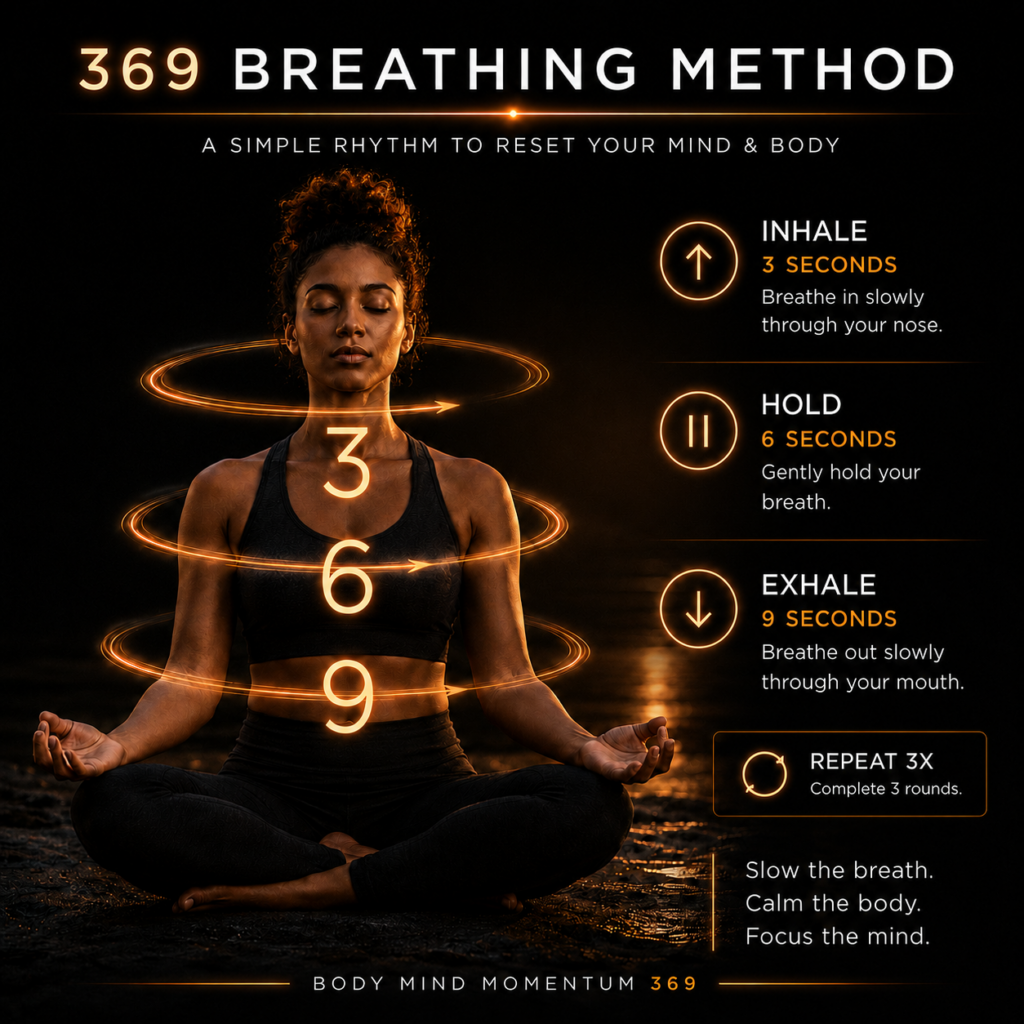
Below are five techniques built around these principles. Each one does something specific. Find the one that fits where you are right now and start there.
5 Breathing Techniques to Align with the 369 Method
1. 3-6-9 Breathing Technique
How to Do It:
- Inhale for 3 seconds — breathe in deeply through your nose, filling your lungs completely.
- Hold for 6 seconds — let the oxygen settle. Don’t force it.
- Exhale for 9 seconds — slow and controlled through your mouth. Let the tension go with it.
Benefits: The long exhale is what makes this one work. It activates your parasympathetic nervous system — your body’s rest and recover mode. Stress hormones drop, your heart rate slows, and your mind clears. The more consistently you practice this, the faster your body learns to shift states on command. Use it before sleep, before a difficult conversation, or any time the pressure starts building.
2. Resonant Breathing (Coherent Breathing)
How to Do It:
- Inhale for 6 seconds — breathe in deeply through your nose, letting your belly expand first, then your chest.
- Exhale for 6 seconds — slow and steady through your nose or mouth.
- Repeat for 5 to 10 minutes without breaking the rhythm.
Benefits: Simple and underrated. This pattern — also called coherent breathing — is one of the most studied breathing methods out there. It improves heart rate variability, which is a direct measure of how well your body handles stress. Do it daily and things start to level out. The chaos doesn’t hit as hard. You respond instead of react.
3. 6-Second Wave Breathing
How to Do It:
- Inhale for 3 seconds — visualize the breath as a wave rising from your belly up through your chest.
- Exhale for 6 seconds — let the wave fall. Release the tension with it.
Benefits: This one is for when your mind won’t sit still. Giving the breath a visual anchor keeps your focus from drifting — something to follow instead of fighting your own thoughts. It’s simple enough to do at your desk, on the train, or before bed. Meditative without needing to be in meditation. If you struggle to stay present during breathing exercises, start here.
4. The Wim Hof Method (Adapted for 369)
How to Do It:
- Take 30 deep, rapid breaths — inhale fully through your nose, exhale through your mouth in quick succession.
- After the 30th breath, exhale completely and hold for as long as you comfortably can.
- Then inhale for 3 seconds, hold for 6, exhale for 9.
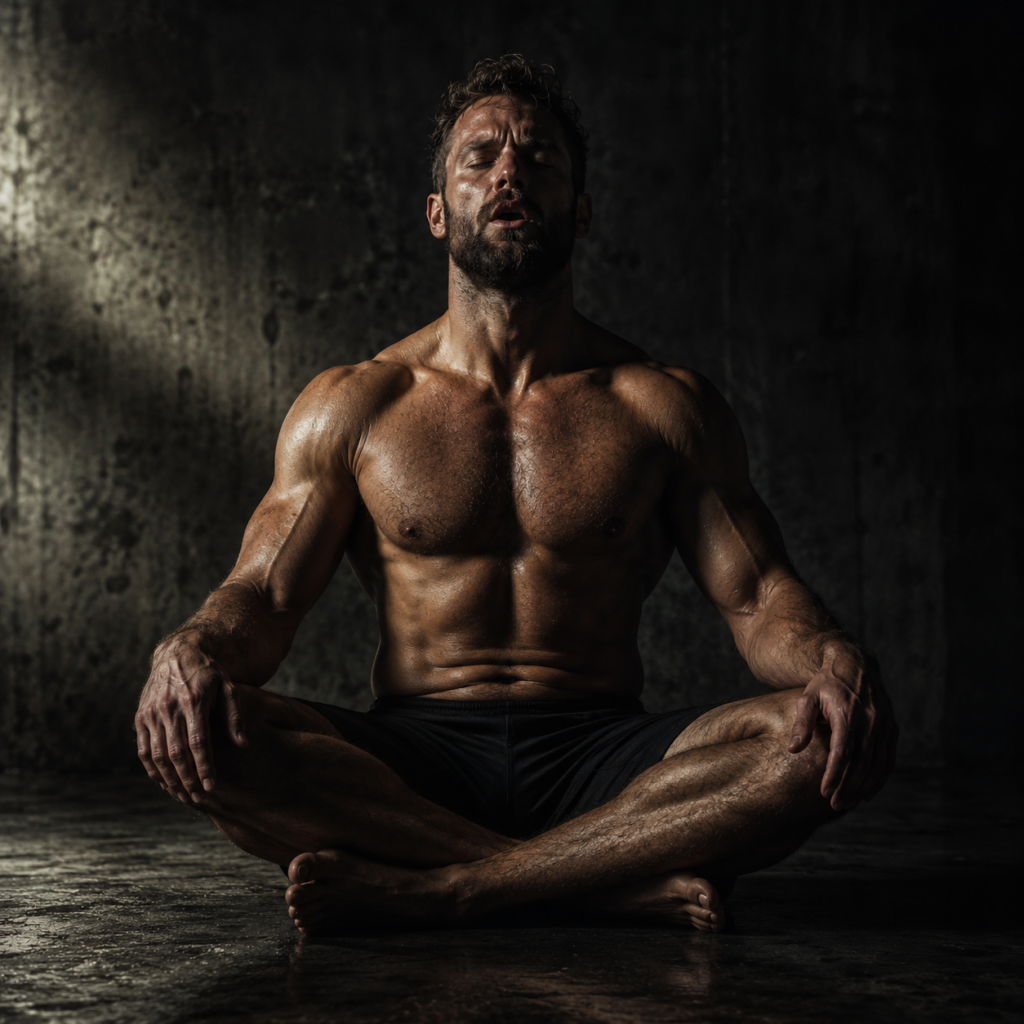
Benefits: I’ve done this one personally. It takes getting used to — the rapid breathing is intense and you’ll feel it in your body. Light-headed, tingling, a little strange at first. That’s normal. But when you come out the other side into that 3-6-9 pattern, something shifts. More alert, more grounded, more in your body than you were five minutes ago. The Wim Hof Method is backed by science — it reduces inflammation, boosts immune response, and elevates mood. The key word is consistency. Like everything that actually works, you only get the benefit if you show up regularly.
5. The 9-Second Pause
How to Do It:
- Inhale for 3 seconds — fill your lungs completely.
- Pause for 3 seconds at the top — let your body absorb it.
- Exhale for 3 seconds — controlled and steady.
Benefits: Nine seconds. That’s the whole thing. This is the one you reach for mid-day — before a decision, after a setback, when the stress is building and you need a fast reset without anyone around you even noticing. Small window, real effect. Don’t underestimate it because it’s short. Sometimes the simplest tool is the one that gets used most.
These five techniques are practical, not complicated. You don’t need a special place, a timer, or a routine built around them — you just need to start. Pick the one that fits where you are right now and do it today. Give it two weeks of consistency and see what changes. The 369 pattern gives your breath structure, and structure is what turns a one-time attempt into something that actually sticks.
Breathing for Better Health: How Mindfulness Breathing Impacts Your Body

Breathing with intention does more than calm your mind — it directly affects your physical health. Most people don’t realize how much is happening under the hood every time they take a controlled breath. Here’s what the science actually shows.
1. Reduces Stress and Anxiety
When you’re stressed, your breath goes shallow and fast — and your body reads that as a threat. It stays locked in fight-or-flight, burning through energy and keeping your cortisol elevated. Extending your exhale, the way the 3-6-9 technique does, sends the opposite signal. Your nervous system shifts, cortisol drops, and the tension starts to release. It’s one of the fastest ways to interrupt a stress response without any external help.
2. Lowers Blood Pressure
High blood pressure is often linked to stress and tension — and I have a lot of both. When your nervous system stays in overdrive, your cardiovascular system pays the price. Regular breathing practice — especially something as quick as the 9-Second Pause — gives your body a consistent signal to downregulate. Over time that adds up. Studies show that slow, controlled breathing can produce sustained reductions in blood pressure. It won’t replace your doctor’s advice if you need medication, but it’s one of the most accessible and free tools you have working in your favor every single day.
3. Enhances Lung Function and Oxygenation
Deep, diaphragmatic breathing expands your lung capacity over time and improves how efficiently your body exchanges oxygen. The Wim Hof Method is the standout here — the rapid breathing cycle followed by the deep inhale and extended exhale floods your cells with oxygen in a way normal breathing never does. I practiced it myself and the effect is real. It takes time to get comfortable with — the intensity catches you off guard at first. But stick with it. Consistency is the whole game, with this and everything else that actually works.
4. Alleviates Physical Tension
Most people carry tension in their body without realizing it — tight shoulders, a stiff neck, a jaw that’s been clenched all day. It builds up quietly and stays there. 6-Second Wave Breathing is particularly effective for this because mindful breathing makes you aware of your own body. That awareness connects mind to body, and with each exhale you release with intent — you see it and feel the tension and stress leaving your muscles, your joints, your chest. Your body responds to what your mind focuses on. Direct that focus toward releasing, and that’s exactly what happens.
5. Supports Immune Function
Breathing exercises have been shown to boost immune function by reducing inflammation and increasing the body’s production of norepinephrine — a hormone that plays a direct role in immune response. Practice consistently and you’re not just managing stress. You’re building a body that’s more resilient, recovers faster, and handles what gets thrown at it better than before.
Integrate these practices into your daily routine and the benefits stack up — mental clarity, emotional balance, physical recovery. Mindful breathing aligned with the 369 method isn’t a complicated system. It’s a simple tool that compounds over time, and that’s exactly what makes it powerful.
Sometimes you need to go deeper than the physical to reach the next level. When your mind and body start working together — when your breathing becomes intentional and your awareness sharpens — something shifts. Your energy changes. Your outlook changes. The way you show up in the world changes. That’s not mysticism, that’s what happens when you stop running on autopilot and start operating with intention. The 369 method gives you the structure to do exactly that.
Conclusion: Harnessing the Power of Breath for a Balanced Life

You’ve been breathing your whole life. Now use it with purpose.
These five techniques give you real tools — not theory, not motivation quotes — actual methods you can reach for when the pressure builds, the energy drops, or the mind won’t slow down. Pick one. Do it today. Give it two weeks of consistent practice and pay attention to what changes.
The 369 method is about structure — giving your mind and body a framework to operate from. Your breath is where that starts. Master it and everything else becomes more manageable. And if you want to take that mindset work further, read this next: Manifestation Mindset: 5 Powerful Ways to Elevate Your Reality.
“The breath of the universe is the wind that blows through the trees, the spirit that animates all life.” — Native American Wisdom
Dream. Act. Elevate.