
What nobody in the supplement industry wants to admit, what real experience actually teaches you, and how to decide if a protein shake belongs in your routine.
Let’s Talk About What Nobody Wants to Say
Are protein shakes worth it? That depends entirely on who is taking them, why, and whether they actually understand what they are buying.
There are thousands of people online telling you to take this supplement, stack that powder, drink this shake, and follow their exact protocol for maximum results. What most of them never stop to ask is whether that advice actually works for you — your body, your gut, your health history, your lifestyle.
That matters more than most people admit.
Someone tells you to drink warm lemon water with cayenne pepper on an empty stomach every morning. Sounds clean. Sounds healthy. Nobody mentions what that combination does to a person with acid reflux. Someone else tells you to put a pinch of Celtic salt under your tongue daily for mineral absorption. Fine advice — unless you have hypertension. Then it is not fine at all.
Generic wellness advice handed out without context is not helpful. It is lazy. And the supplement industry is one of the worst offenders.
So here is a straight answer based on real experience — including the brand I actually use and why.
What Protein Shakes Actually Are
A protein shake is a convenient way to consume protein in liquid form. That is it. It is not magic. It is not a shortcut. It is not going to transform your body on its own.
Most protein powders on the market are either whey based, plant based, or casein based. Each has its place and each has its drawbacks depending on who is using it and when.
Whey protein — particularly whey isolate — is fast digesting, high quality, and well researched. It absorbs quickly which makes it useful around training. Whey concentrate is similar but contains more lactose which causes problems for people with digestive sensitivities.
Casein is slow digesting — it releases protein gradually over several hours which makes it popular as a before bed option. But if you suffer from acid reflux, gut disorders, or any kind of digestive issue, casein is heavy on the system. It is not dangerous but it can be genuinely uncomfortable and for some people it is simply not worth it.
Plant based proteins — pea, rice, hemp — are a valid option for those who cannot tolerate dairy. The amino acid profile is generally not as complete as whey but combining sources covers most of the gap.
The supplement industry will rarely tell you any of this clearly. They will tell you their product is the best. Read the label instead.
Where Protein Shakes Genuinely Help

Used intelligently, a protein shake is a useful tool. Here is where it actually earns its place:
When you have missed a meal and need protein fast, a shake is faster than cooking. When you are travelling or on the move and real food is not an option, a shake fills the gap. When you train and want to get protein in quickly afterwards without sitting down to a full meal, a shake works.
When your daily protein target is genuinely hard to hit through food alone, a shake helps close the difference. And it is not just for drinking — you can add protein powder directly into meals to boost the protein content without changing much else. Oats are the obvious example, but it works just as well in pancake batter, baked goods, and other recipes where the powder blends in naturally.
The key word is tool. A hammer is useful when you need to knock in a nail. It is not useful for everything else.
Where They Fall Short
A protein shake is not a meal. It does not fill you up the same way real food does. It does not have the same satiety, the same lasting fullness, or the same overall nutritional profile. You drink it, you get the protein, and twenty minutes later your stomach has largely moved on.
Compare that to three scrambled eggs with cottage cheese — thirty five to forty grams of protein, real fat, real nutrients, and you are not thinking about food again for three hours. If you have not read that article yet, go read it here. No shake replicates that experience.
They are also more expensive per gram of protein than most real food sources when you break it down honestly. Eggs, cottage cheese, Greek yogurt, and chicken are all cheaper per gram of protein than most mid to premium protein powders. You are partly paying for the convenience and partly paying for the packaging, the marketing, and the influencer who told you to buy it.
That is not a reason to avoid them. It is just a reason to be clear about what you are actually buying.
Not Every Protein Powder Works for Every Body
This is the part nobody talks about honestly enough.
Some protein powders contain added vitamin B6 in higher doses. For most people that is fine. For some people — and I have experienced this personally — taking it on an empty stomach first thing in the morning can be too stimulating. It caused a racing heart and that wired, anxious feeling you get from too much caffeine. It is not dangerous but it is not pleasant either, and if you do not know what is causing it you will spend time blaming other things. Try taking it with food first and see if that makes a difference before switching brands entirely.
Some flavors and formulations use sweetener blends that cause bloating, gas, or digestive discomfort. Some cheaper proteins use fillers and proprietary blends that tell you very little about what is actually in the product.
If you have digestive issues, a standard whey concentrate may cause problems. A hydrolyzed whey isolate — where the protein has already been broken down before it reaches your gut — is significantly easier on the system and worth the extra cost if digestion is something you struggle with.
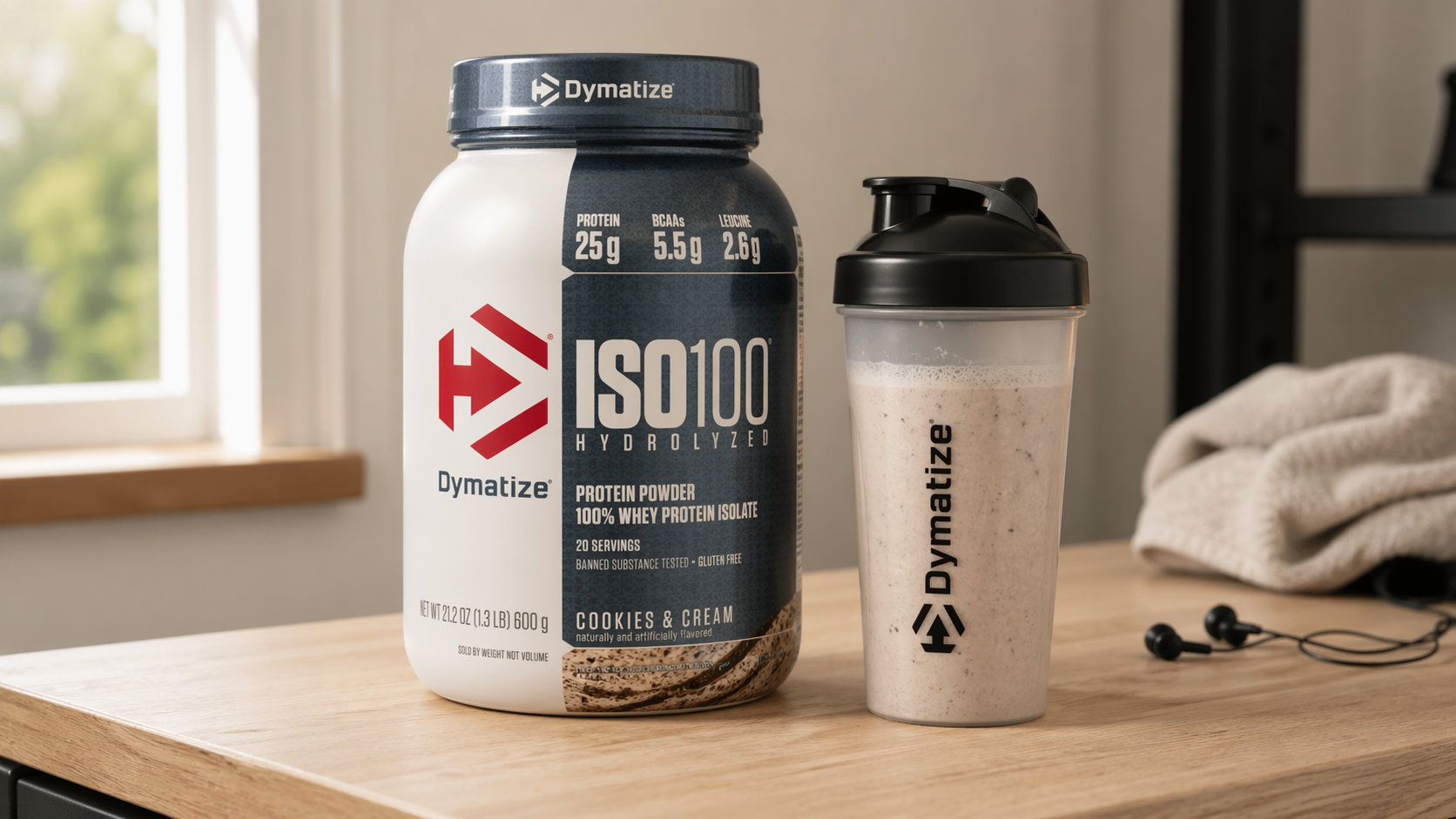
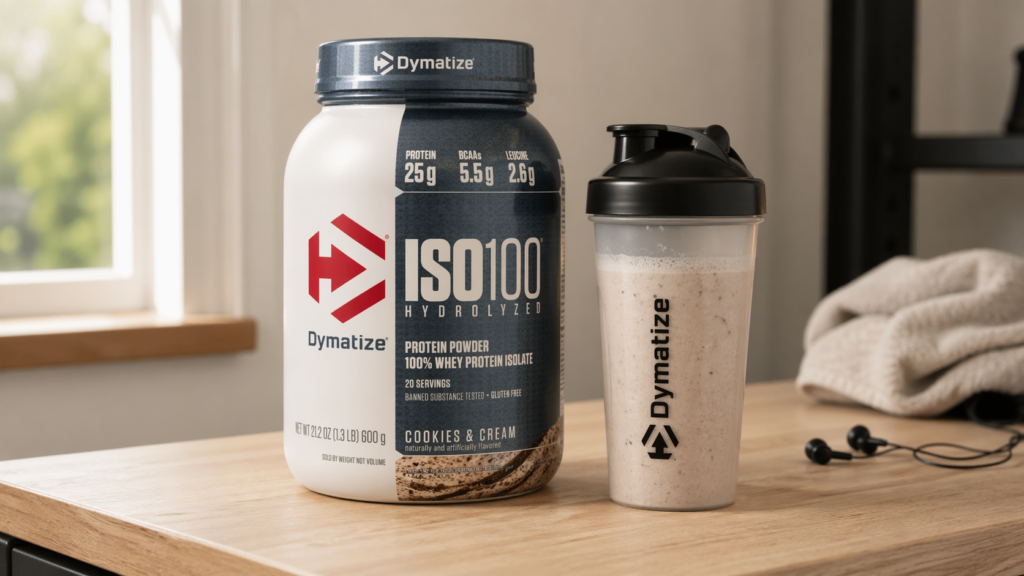
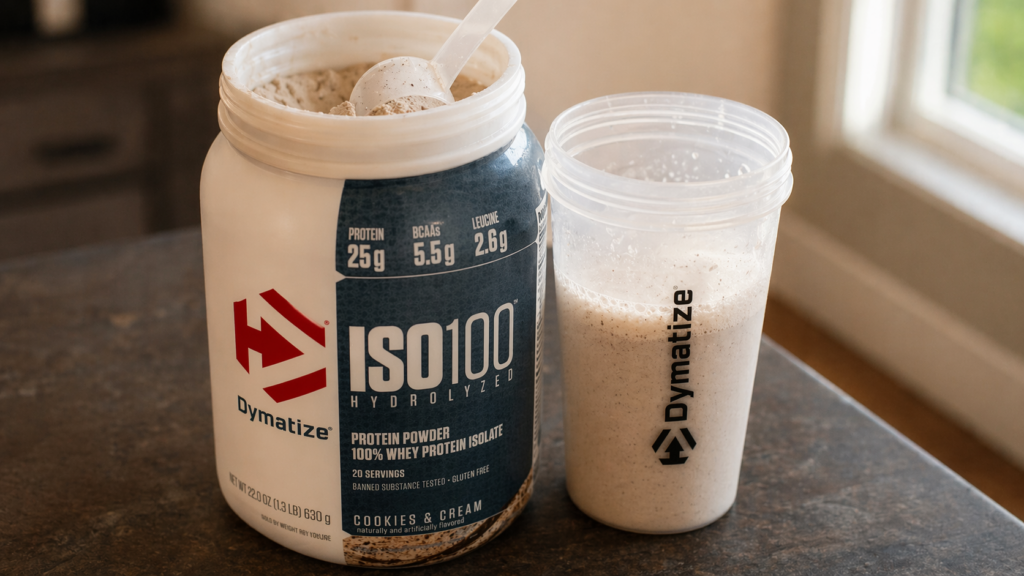
The powder I use personally is Dymatize ISO100 Hydrolyzed Whey Isolate in Cookies and Cream. 25 grams of protein per serving, 5.7 grams of BCAAs including 2.6 grams of leucine, and genuinely easy on the stomach. I have digestive sensitivities and this one has never caused me a problem. It also tastes good — and that matters more than people give it credit for. It is great with water but even better with milk. You would never even know it was a protein shake.
Do You Actually Need to Hit a Daily Protein Target?
Honestly — it depends entirely on what you are trying to do.
I do not obsess over hitting a daily protein number. I am not a professional bodybuilder. I want to be healthy, stay fit, and look good. My oats in the morning cover around 35 to 40 grams of protein. My egg meal later in the day covers another 35 to 40. That is already 70 to 80 grams of quality protein from two real meals before I have even thought about a shake. For my goals that is enough.
But if you are training seriously, trying to build muscle, or working toward a specific body composition goal — then understanding your protein needs is worth doing. Here is the honest breakdown:
| Goal | Per kg | Per lb | Example |
| General health — not training | 0.8g | 0.36g | 80kg person = ~64g/day |
| Regular exercise — staying lean | 1.2g–1.6g | 0.54g–0.72g | 80kg person = 96g–128g/day |
| Serious muscle building | 1.6g–2.2g | 0.72g–1g | 100kg person = 160g–220g/day |
Anything above 2.2g per kg shows diminishing returns for most people and is generally only relevant in specific cutting phases for competitive athletes.
For most people eating two or three solid protein-rich meals a day, a shake is supplementary not essential — but useful on those lazy or busy days when you still want to stay consistent with your protein intake.
One Thing I Used to Do That Actually Worked
Before bed I used to make a shake — not casein, just my regular whey — with my creatine mixed in. Not because I needed the protein at that point in the day. I used it to get my creatine in without taking it on its own, and as something in my stomach so I was not tempted to snack before bed.
It worked. Not because of any protocol or guru advice. Just because it fit my routine, stopped the late night snacking, and got my creatine in consistently without thinking about it. And there is a practical reason why having something before bed makes sense — muscle growth and repair happen while you are sleeping, not while you are working out. So having protein and creatine in your system before you go down is not a bad idea at all.
That is the kind of practical thinking that actually makes a difference. Not following someone else’s stack. Finding what fits your life and doing it consistently.
What to Look for If You Do Buy One
Keep it simple. Here is what actually matters on the label:
Protein per serving — aim for at least 20 to 25 grams per scoop. Anything significantly less and you are paying for filler.
Ingredient list — shorter is better. If you cannot pronounce most of what is in it, that is a signal worth paying attention to.
Sugar content — a small amount is fine and honestly makes it taste better. You are not eating five donuts. But avoid powders where sugar is one of the top three ingredients.
No proprietary blends — these hide the actual amounts of each ingredient behind a single combined weight. You have no idea what you are actually getting.
Digestibility — if you have any kind of gut sensitivity go for a hydrolyzed whey isolate over a concentrate. Your stomach will thank you.
And taste — try a sample size before committing to a large tub. Life is too short to choke down a flavor you hate every morning.
Are Protein Shakes Worth It — The Bottom Line
So are protein shakes worth it? Yes — but only if you use them correctly. They are not essential. They are not magic. And they are not one size fits all.
Used as a tool alongside real food — not instead of it — they can help you hit your protein targets, recover from training, and fill gaps in your routine. Used as a replacement for actual meals and real nutrition they will let you down every time.
Decide what your goal is first. Build your meals around real food. Then add a shake where it genuinely helps, not because someone online told you that you need one.
You decide what goes into your body. Make it an informed decision.
One Last Thing
Protein is just one piece. Knowing how much to eat, when to eat it, and how to structure your meals around your actual goals is where most people get lost — not because the information does not exist, but because most of it is buried under marketing, myth, and advice that was never meant for someone like them.
That is what the next article gets into. Because getting everything your body needs from food alone is increasingly difficult — and knowing which supplements are actually worth taking, and which are just expensive marketing, is a conversation worth having.