
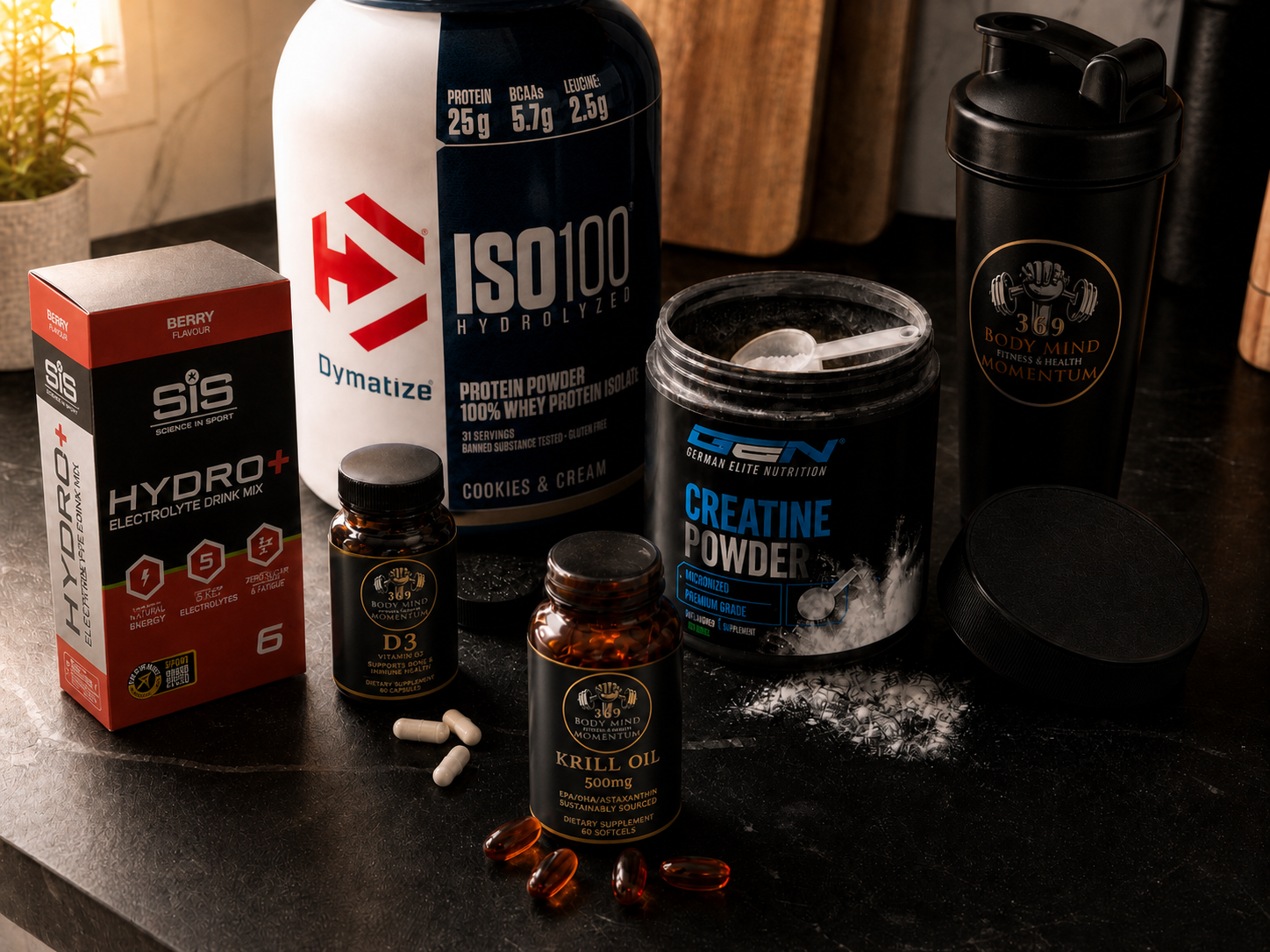
Wondering if supplements are actually worth taking?
You’re not alone.
You know your body could use extra support, but the hard part is knowing what actually helps — and what’s just hype.
Some supplements can make a real difference in your daily life: better energy, better recovery, better sleep, better digestion, and stronger support for your body.
So yes, some supplements are worth taking.
Here are the ones you need to know about.
A note before we start: I’m not a doctor, nutritionist, or medical professional. What follows is based on personal experience, research I’ve done over the years, and what’s worked for me. It’s not medical advice. Always consult a qualified professional before making changes to your health routine — especially if you’re on medication or dealing with a health condition. Links in this article may be affiliate links, which means I may earn a small commission at no extra cost to you if you purchase through them. I only recommend things I’ve personally used or believe in. Some images are fictional mockups and not real products for purchase.
⚡ Quick Answer— Start Here If You’re Skimming
If you just want the short version, here it is:
- Vitamin D3 — for low sun, low levels, and basic immune support.
- Magnesium — for sleep, cramps, stress, tension, and recovery.
- Creatine — for strength, muscle, training, performance, and aging.
- Omega-3 — for heart, brain, joints, and inflammation support.
- Zinc — for immune support, recovery, and possible deficiency.
- Vitamin C — for immune support, antioxidant support, and sensitive stomachs if buffered.
- B Vitamins — for energy, brain function, nerves, and fatigue support.
- Electrolytes — for sweat, heat, training, dehydration, and gut issues.
- Probiotics — for digestion, bloating, gut health, and after antibiotics.
- Multivitamin — for basic backup when your diet is inconsistent.
- Protein powder — for low protein intake, muscle recovery, and convenience.
That’s the real list.
Pick the one that matches the problem.
Let’s Clear Something Up First
Knowing which supplements are worth taking is harder than it should be. Food is foundational — nothing in this article changes that. But for most people living real lives, food alone doesn’t cover everything.
Modern farming has stripped a lot of nutritional density from the soil our food grows in. Most people are under chronic stress, not sleeping well, and not absorbing nutrients as efficiently as they should be. How active you are changes what your body burns through. Your age changes what you can absorb. Your gut health determines how much of anything you actually get from what you eat.
The gaps are real. And the gaps are different for everyone.
That’s the whole point of supplements. Fill the genuine gaps. Support the body in what it can’t reliably get on its own. Use them for prevention, for maintenance, for targeted support — not as a substitute for real food, but alongside it.
Are they bad? No. Do you need them? Depends on you. Do they help? Absolutely — when you’re using the right ones for the right reasons.
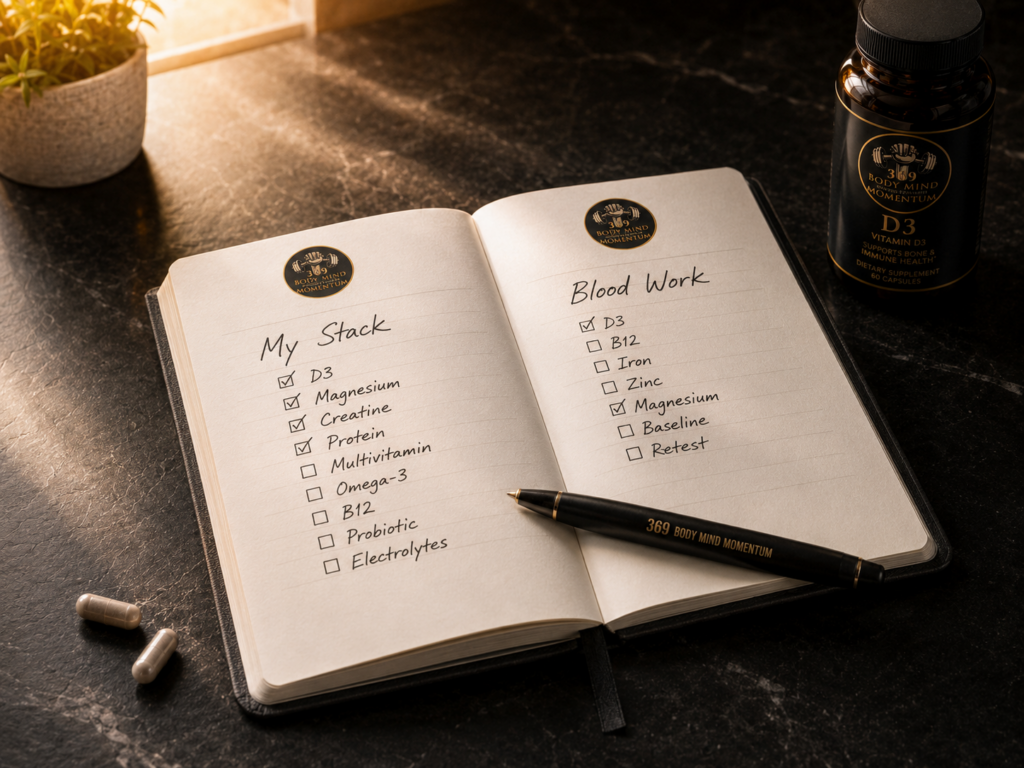
Do This Before You Buy Anything: Get a Blood Test
Before you spend a single penny on supplements, get a full blood panel done.
Not a quick cholesterol check. A proper one — covering key vitamins and minerals. Vitamin D, B12, iron, zinc, magnesium where testable, and anything else your GP recommends based on your history.
Here’s the important bit: stop taking any supplements at least five days before the test. If you don’t, your results will reflect what you’ve been taking, not what your body actually has. You want the baseline — the real picture, unfiltered.
Once you know your baseline, you’re supplementing with intention. You know what’s low. You know what’s fine. You’re not guessing, and you’re not wasting money on things your body doesn’t need.
That’s the starting point. Everything else comes after.

The Supplements Worth Taking — And Why They Made the List
1. Vitamin D3
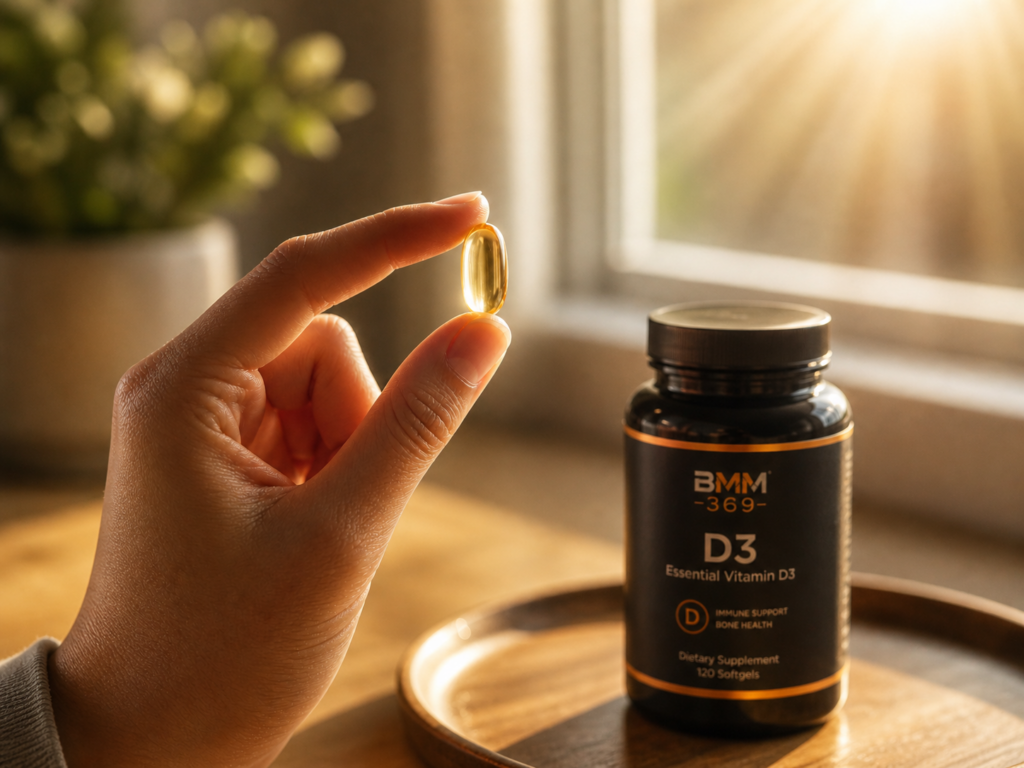
“Disclaimer: This image is a fictional mockup for illustrative purposes only. This product does not exist and is not available for purchase.”
The basics: Vitamin D is fat-soluble and primarily made by the skin through sun exposure. Most people in modern life — office workers, people in northern climates, anyone indoors most of the day — are deficient.
Low vitamin D is associated with poor immune function, fatigue, low mood, and muscle weakness. In men, studies have found a correlation between low vitamin D levels and lower testosterone — though the evidence on whether supplementing D3 directly raises testosterone is mixed and worth being honest about. What is clear is that correcting a deficiency has broad positive effects across the body.
Personal note on this one: I was very low on Vitamin D for a long time. Even after consistent supplementation, I’m still just under sufficient — and that tells you something important. Getting levels up is a slow process. It doesn’t happen in a few weeks. You supplement, you retest, you adjust. I don’t take it every single day year-round but I’m consistent, especially through the colder months and whenever I know I’ve been mostly indoors. The lesson here is don’t expect quick results — and don’t stop taking it just because you don’t feel an immediate difference.
What to take: 2,000–4,000 IU daily with food. Pair with K2 at higher doses — it helps direct calcium to bones rather than soft tissue.
Do this now: if you’re indoors most of the day or rarely get strong sunlight, check your vitamin D levels before you start guessing.
2. Magnesium
The basics: Magnesium is involved in over 300 enzymatic processes in the body — sleep, muscle function, energy production, stress regulation. Most people eating a Western diet don’t get enough from food. Training depletes it. Chronic stress depletes it faster.
I take magnesium glycinate after dinner or before bed. The main reason I started was morning cramps — that sudden, brutal calf cramp that jolts you awake at 6am. Magnesium made a real difference there. The sleep improvement was a bonus I didn’t expect but noticed within the first week.
What to take: Magnesium glycinate or malate, 200–400mg before bed. Skip magnesium oxide — it’s poorly absorbed and cheap for a reason.
Do this now: if sleep, cramps, tension, or recovery are a problem, try magnesium at night and see how you feel after one week.
3. Creatine Monohydrate
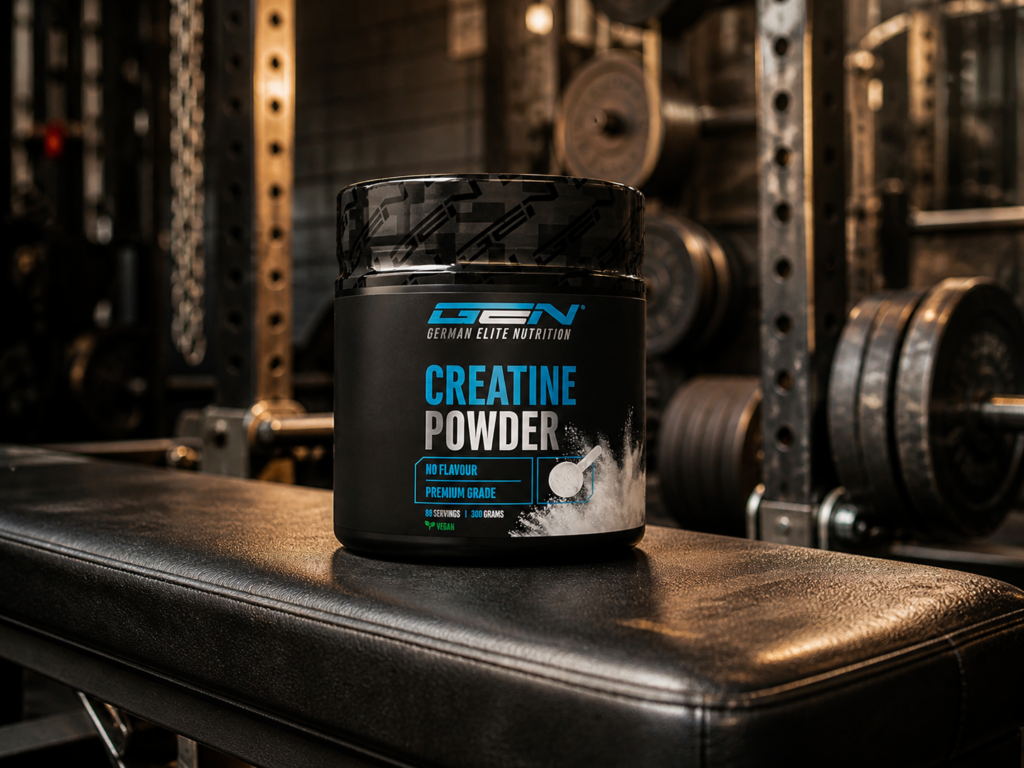
The basics: Creatine is the most researched performance supplement in existence. Decades of data. The evidence for strength, power, and recovery is solid. But it goes beyond the gym — research published by the National Institutes of Health also supports benefits for cognitive function and muscle retention as we age, particularly relevant for anyone over 40.
The body produces creatine naturally and also gets it from meat. Vegans and vegetarians tend to have lower baseline levels and often see the strongest response to supplementation.
I take it daily — either in my morning shake or before bed with my second protein shake. That evening shake with creatine has become a useful habit in its own right. It keeps me full, stops the late-night snacking, and I know I’m covering my creatine at the same time. Two problems, one solution.
One thing worth noting: the creatine I use is completely flavorless. Mixes into water or a shake without changing anything. No need for expensive branded versions with extras you don’t need. Plain monohydrate does the job.
What to take: 3–5 grams of creatine monohydrate daily. No loading phase needed. Just be consistent.
Do this now: if you train or want to stay strong as you age, take plain creatine monohydrate consistently and skip the fancy blends.
4. Omega-3 Fatty Acids (EPA/DHA)
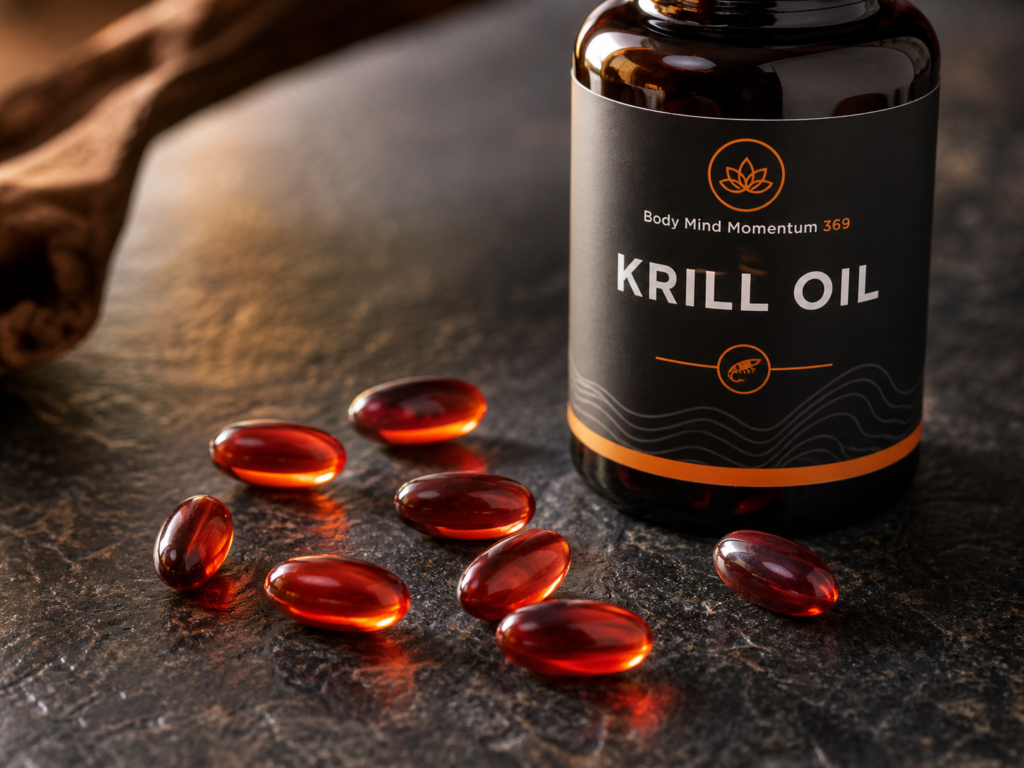
The basics: The modern diet is heavily skewed toward omega-6 fats, which drives chronic inflammation. Omega-3s — specifically EPA and DHA — counterbalance that. The evidence supports benefits for cardiovascular health, joint function, and brain health over the long term.
“Disclaimer: This image is a fictional mockup for illustrative purposes only. This product does not exist and is not available for purchase.”
Honest personal note: standard fish oil gives me bloating and burping. Not ideal. The quality of the product matters enormously — rancid fish oil is worse than no fish oil. I’ve had better results switching to krill oil. It absorbs differently — krill oil delivers EPA and DHA in phospholipid form, which the body takes up more readily than the triglyceride form in most fish oil. It also contains astaxanthin, a natural antioxidant that helps protect the oil from oxidising. Less bloating for me, better absorption overall. It tends to cost a bit more, but if fish oil has been giving you grief, krill oil is worth trying.
Algae-based omega-3 is another option — same EPA/DHA, no fish at all, and worth considering if you’re plant-based or just done with fish burps entirely.
If omega-3 has caused issues for you before, don’t write it off — the form matters.
What to take: 1–3 grams of combined EPA/DHA daily. Read the label — the total oil weight is not the same as the EPA/DHA content.
Do this now: if you don’t eat fatty fish twice a week, consider adding omega-3 to cover the gap.
5. Zinc
Important: This one more than any other — get the blood test done first.
Zinc plays a critical role in immune function, protein synthesis, wound healing, and hormone regulation. A peer-reviewed systematic review confirms that zinc deficiency negatively affects testosterone production — the body needs zinc to support the enzymatic processes that produce testosterone in the Leydig cells. Importantly, if your levels are already normal, supplementing extra zinc won’t push testosterone higher. It only helps when you’re deficient. Which is exactly why you need to know your baseline.
Zinc also competes with copper absorption at higher doses, so this isn’t one to guess at or take at random.
I used zinc for a period after blood work confirmed my levels were on the lower end. It helped. Energy, libido, general resilience — I noticed the difference. Now I manage it through diet where possible and cycle it back in when needed.
What to take if deficient: 15–30mg daily. Zinc picolinate or citrate absorbs better than oxide. Don’t exceed this without guidance.
Do this now: ask for a blood test to check your zinc levels, then decide if you actually need it.
Quick Reality Check
This is where people mess it up.
They read a list like this and think they need everything.
You don’t.
Pick the supplement that matches the problem in front of you. Sleep, recovery, digestion, energy, protein, blood work — start there.
Supplements work best when they have a job. Without a job, they’re just expensive clutter.
6. Vitamin C
A reliable, unglamorous workhorse. Supports immune function, collagen production, iron absorption, and acts as an antioxidant. Water-soluble, so excess is cleared by the body rather than stored.
One real-world caveat: if you suffer from acid reflux, standard ascorbic acid can aggravate it. I know this from personal experience — it’s not pleasant. Buffered Vitamin C (calcium ascorbate or sodium ascorbate) delivers the same benefit without the acidity. Worth knowing before you dismiss it.
What to take: 500–1,000mg daily. No need to megadose under normal circumstances.
Do this now: if regular vitamin C gives you reflux or stomach burning, switch to a buffered version and see if it feels easier to tolerate.
7. B Vitamins
B vitamins support energy metabolism, nervous system function, and immune health. B1 (thiamine) in particular plays a key role in how the body converts carbohydrates into energy — brain, muscles, heart. Clinical research supports a positive effect of B1 and B2 on stress, mood, and sleep quality, likely through their role in neurotransmitter synthesis and reducing oxidative stress.
They’re water-soluble. What your body doesn’t use, it clears. No long-term accumulation risk at sensible doses.
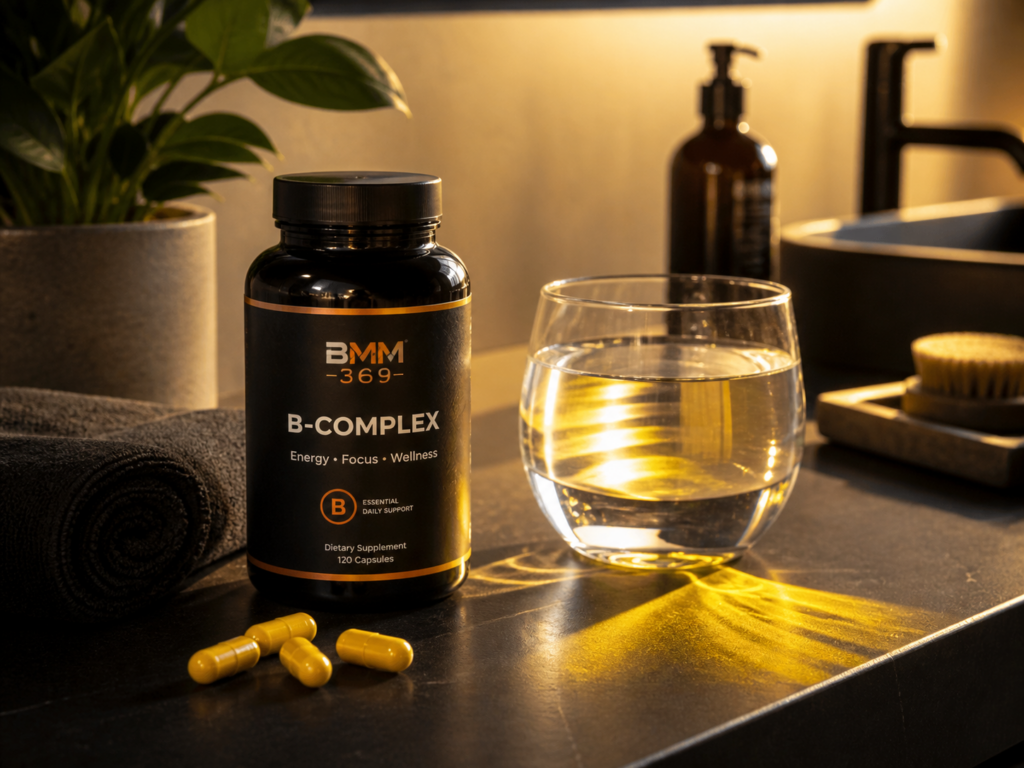
Side note worth knowing: If you start taking a B-complex and your urine turns bright fluorescent yellow — don’t panic. You haven’t been abducted by aliens. That’s riboflavin (B2) being excreted. It’s water-soluble, your body is clearing the excess, and it’s completely harmless. It just means the vitamins are doing what water-soluble vitamins do.
“Disclaimer: This image is a fictional mockup for illustrative purposes only. This product does not exist and is not available for purchase.”
These don’t need to be permanent. A month-long course of a quality B-complex can replenish depleted stores and make a real difference in energy and how you handle stress. Then you stop. Bring them back when you need them. Situational. Practical. No drama.
A specific mention for B12: As you get older — particularly from your 40s onward — the stomach produces less intrinsic factor, which is what the body uses to absorb B12 from food. You can be eating well and still end up low. I’m 53 and I supplement B12 separately, targeted, because mine runs on the lower side even with a decent diet. After supplementing, my levels came up — still not high, but improved enough to feel the difference in energy and mental clarity. It works. But you need to actually need it for it to work. Get the blood test first.
What to take: A quality B-complex for a targeted course. B12 separately if your levels warrant it — methylcobalamin is the more bioavailable form.
Do this now: if you’re unsure, don’t overcomplicate it — B-complex gives broader support, while B12 is more targeted.
8. Electrolytes
Often overlooked. Shouldn’t be.
When you sweat — through training, heat, or just being active — you lose more than water. Electrolytes regulate fluid balance, support muscle contraction, and keep energy from crashing mid-session or mid-afternoon.
Magnesium-potassium combinations are particularly useful for energy and muscle function during high-volume training or in warmer months. SIS Hydro+ is what I use personally — low sugar, effective absorption, practical for training and for hot days. Works for me and it’s worth trying if you’re someone who trains hard or sweats a lot, especially in summer.
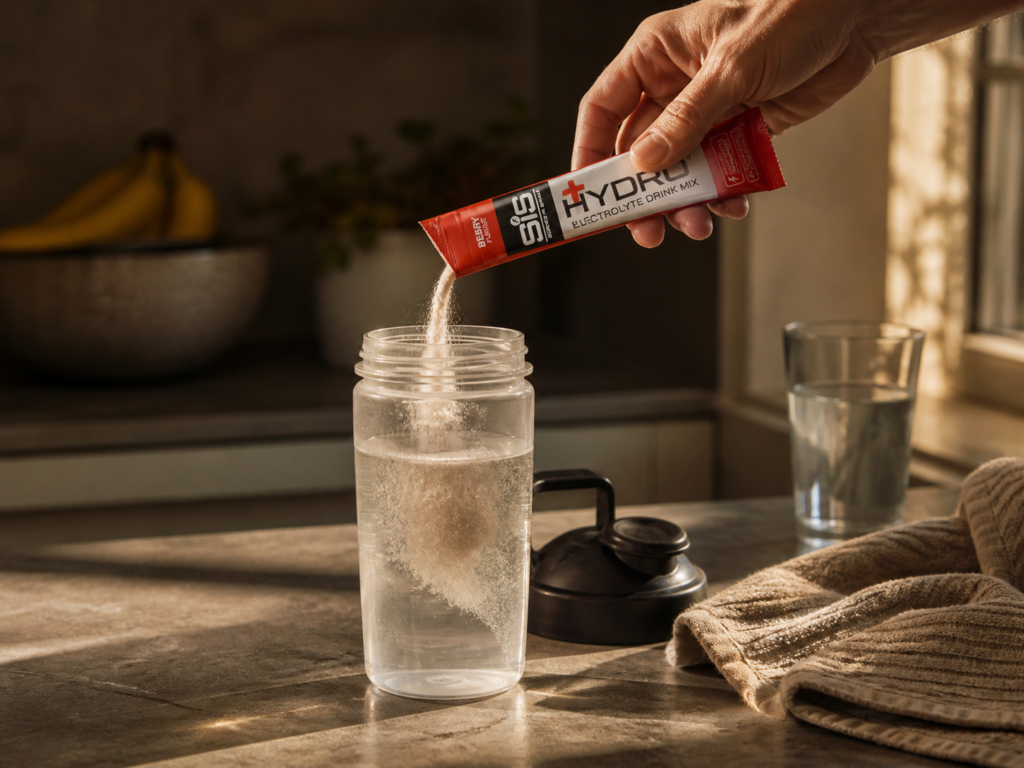
A practical note that doesn’t get mentioned enough: If you’ve had loose stools, diarrhea, or gut issues and you start getting that faint, queasy, depleted feeling — electrolytes can help you recover almost on the spot. Diarrhea causes rapid electrolyte loss, and that washed-out feeling is often your body signalling the deficit. Replacing electrolytes quickly can stabilise you fast. Worth having something on hand for exactly this reason. That said — if gut issues are persistent or serious, see a doctor. This isn’t a substitute for that.
This isn’t elite athlete territory. This is anyone who wants to feel functional rather than flat.
When it matters most: Summer months. High-intensity training. Fasted training. Gut disruption. Anyone who sweats heavily.
Do this now: if heat, sweating, training, or stomach issues leave you drained, try electrolytes before another coffee.
9. Probiotics
Gut health isn’t a trend. It’s the foundation everything else is built on. And if you’re serious about knowing which supplements are worth taking, this one belongs on the list.
If your gut is compromised — bloating, irregular digestion, food sensitivities, low energy that doesn’t make sense — your body isn’t absorbing nutrients properly. It doesn’t matter how good your diet is or how many supplements you’re taking. A damaged gut lining means reduced absorption across the board. You’re essentially pouring money down the drain.
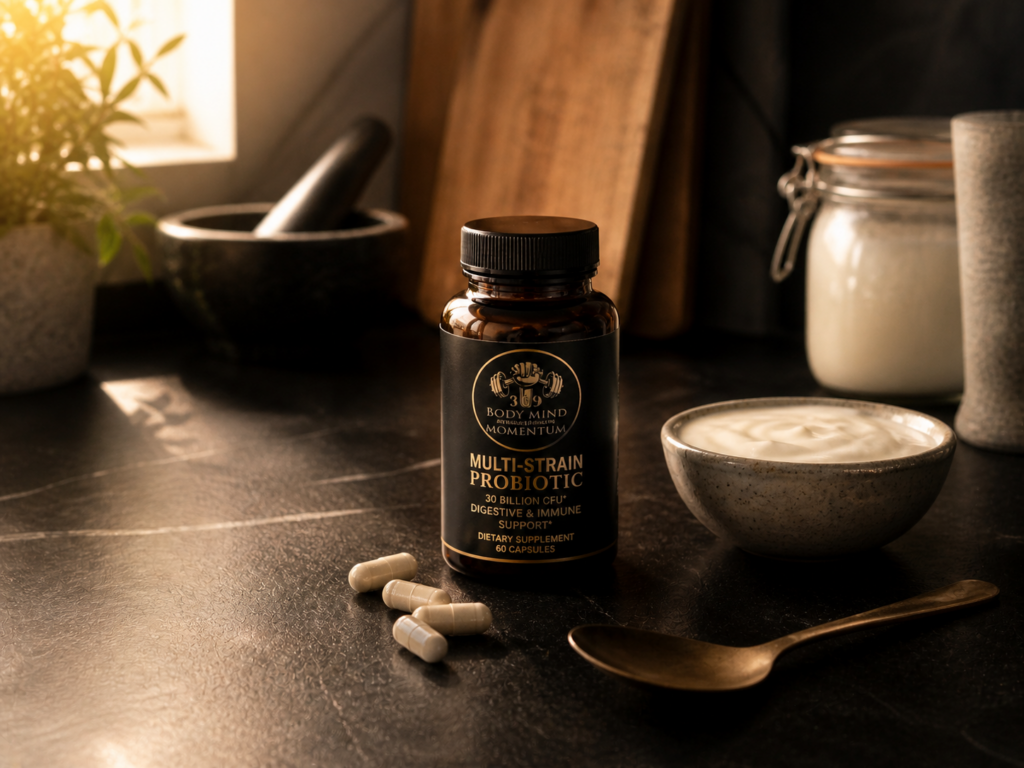
Probiotics help restore and maintain the balance of good bacteria in the gut. That balance affects digestion, immune function, inflammation levels, and even mood — the gut-brain connection is real and well documented. A healthy gut microbiome is one of the better investments you can make in your overall health, and most people over 40 have taken enough antibiotics, eaten enough processed food, and run enough chronic stress through their system to have knocked that balance off at some point.
“Disclaimer: This image is a fictional mockup for illustrative purposes only. This product does not exist and is not available for purchase.”
I take probiotics consistently. The difference in digestion, bloating, and general gut comfort is noticeable. If you’ve ever had a course of antibiotics, that alone is reason enough to run a good probiotic for at least a month afterward to rebuild what was wiped out.
Look for a multi-strain probiotic with at least 10 billion CFU. Refrigerated versions are generally more viable than shelf-stable ones, though good shelf-stable formulations exist. Take it away from antibiotics if you’re on them — space them out by a few hours so the antibiotic doesn’t just kill what you’re trying to replenish.
What to take: Multi-strain probiotic, 10–50 billion CFU daily. Consistency matters more than megadosing.
Do this now: if your digestion feels off, stop ignoring your gut.
10. Multivitamins
Here’s how to think about these: prevention and coverage, not repair.
A multivitamin won’t fix a genuine deficiency — you need to address that specifically. But as a daily baseline — a net to catch what your diet misses on any given week — a quality multivitamin makes sense. Life isn’t always perfect nutrition. Some weeks you travel, some weeks you’re under pressure and eating badly. A multi is a buffer against real-world imperfection, not an excuse for it.
I take one when I remember. If I don’t, I don’t stress about it. That’s genuinely how I approach it — it’s there as a buffer, not a commitment. Some weeks I’m consistent with it, some weeks I’m not. The point is it’s there when I need it, not that I need it every single day.
Look for active forms of key nutrients — methylfolate over folic acid, methylcobalamin over cyanocobalamin. Absorption from cheap multivitamins can be poor. Quality matters here more than people realise.
Do this now: use a multivitamin as backup, not as permission to eat badly.
11. Protein (Whey or Plant-Based)
Not a supplement in the traditional sense — it’s food in convenient form. If you’re hitting your protein targets through whole food, you don’t need it. If you’re not — and most people over 40 aren’t — protein powder closes the gap without having to eat chicken at 7am.
Every morning I have protein powder with my oats. It’s filling, it sets up the day right, and it keeps me from making bad choices mid-morning. If you want to see exactly how I do it, check out my high-protein oats breakfast here — it’s simple, takes minutes, and actually keeps you full.
Whey isolate if you tolerate dairy — Dymatize ISO 100 is what I use and it mixes clean. Pea and rice blend if you don’t. And if you’re still not sure whether protein powder is worth it at all, I covered that in full here.
25–40 grams post-training or first thing in the morning. Straightforward.
Do this now: track your protein for one normal day. If you’re low on protein, adding protein powder makes sense.
The Supplements I Skip (And Why You Probably Should Too)
Testosterone Boosters: Herbal blends dressed up with bold labels and weak evidence. If you genuinely have low testosterone, that’s a conversation with a doctor — not a supplement store purchase.
Fat Burners: Mostly stimulant stacks. The caffeine does something. The rest is usually filler. A calorie deficit and a black coffee achieves the same result for a fraction of the price.
BCAAs: If you’re eating sufficient protein, you’re already getting your BCAAs. Supplementing on top of adequate protein is redundant.
Most Pre-Workout Blends: Buy creatine and caffeine separately. Cheaper, more transparent, and you know exactly what you’re getting.
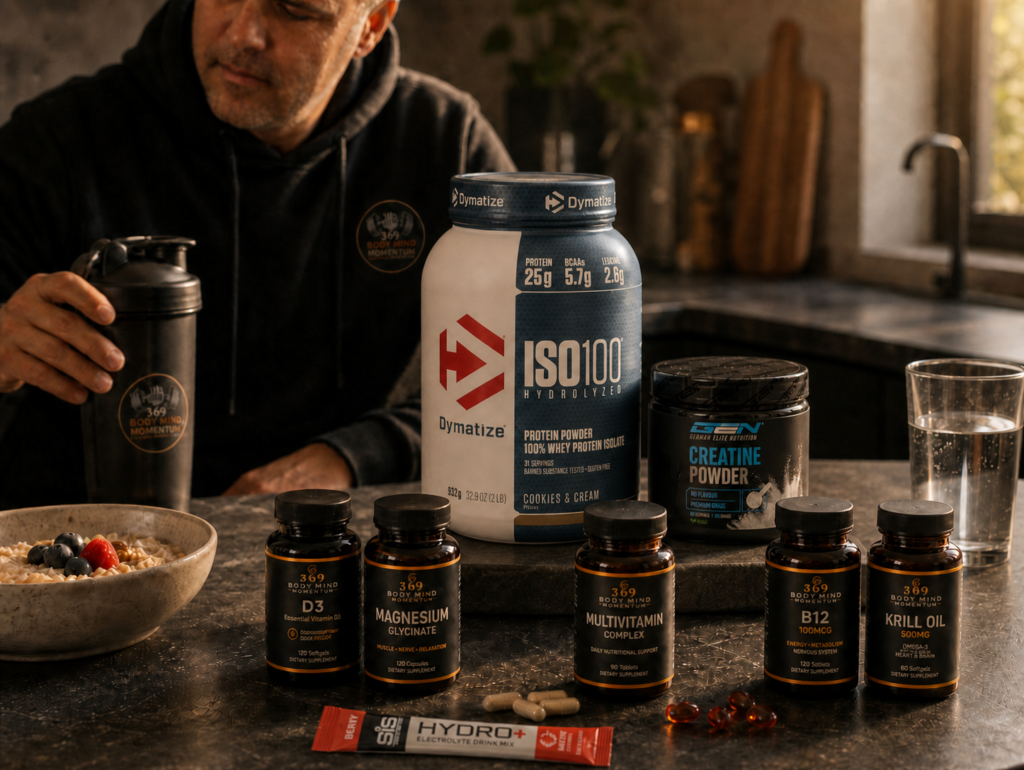
My Personal Stack — And Why It Doesn’t Have to Be Rigid
Here’s what I actually take, and why.
D3 — not every day, not rigidly year-round. I was very low for a long time and I’m still working my way up to sufficient levels. It takes longer than people think. I’m consistent through winter and whenever I know I’ve been mostly indoors. I take it with food. Slow progress is still progress.
Magnesium glycinate — after dinner or before bed. I started it for morning cramps — that sudden calf cramp that wakes you up at 6am ready to fight an invisible enemy. Sorted that. The better sleep was a bonus.
Creatine monohydrate — in my morning shake or before bed with my second protein shake. That evening shake doubles up as a way to stay full and avoid late-night snacking. Flavorless, easy, and I’ve been taking it long enough that skipping it feels wrong.
Protein powder — every morning with my oats. I use Dymatize ISO 100 — it’s a whey isolate, mixes clean, and doesn’t mess with the texture of the oats. It’s the foundation of my breakfast and it sets the day up right. Check out the full recipe here — it’s quick and genuinely keeps you full. I also reach for it post-training when I need to hit my numbers. And if you’re still deciding whether protein powder is worth the money, I broke it down here.
Multivitamin — when I remember. No guilt when I don’t. It’s prevention and coverage, not a lifeline. The weeks I’m consistent with it feel slightly better. The weeks I’m not, I don’t notice anything dramatic. That’s how it should work.
Omega-3 (krill oil) — I switched from fish oil because of the bloating. Krill absorbs better and sits easier. Still not the most consistent with it, but I’m working on that.
Zinc — cycled in when I feel I need it or when blood work says so. Not a permanent fixture right now.
Probiotics — this one is personal. I had surgery that resulted in having a section of my small intestine removed. That’s when gut health stopped being an abstract concept and became very real, very fast. Afterwards, I noticed changes in everything — skin condition, immune response, how I was absorbing nutrients. Things I hadn’t connected to the gut before. Probiotics became a non-negotiable after that. I’m not saying you need surgery to understand their value — but I’ve been inside this from the worst end of it, and I can tell you the gut affects far more than digestion. Everything runs through it.
Electrolytes (SIS Hydro+) — during training and on hot days. Makes a tangible difference in how I feel mid-session and after. Summer essential.
B12 — separately, targeted, because mine runs low. Not deficient, but low enough to feel it — fatigue, brain fog, that kind of thing. Since supplementing, my levels have come up. Still not high, but functional. That’s the difference between knowing your numbers and guessing.
Is this a strict daily regime? No. That’s not the point.
Some of these I take every day. Some I cycle. Some I reach for when I feel I need them. The body changes. The seasons change. What you need in January is not necessarily what you need in August.
The framework is simple: use supplements for maintenance, for prevention, and for support. Not to replace real food — alongside it. Not because a label told you to — because you understand what your body actually needs and why.
Get the blood work done. Know your baselines. Fill the real gaps. Adjust as life changes.
That’s the whole thing.
Before you buy anything, ask one question: What problem is this supposed to fix? If you don’t have an answer, leave it alone for now.
You’ve got the list. You’ve got the framework. Now the only thing left is the bit most people skip — actually doing something with it.
Final Word
Are supplements bad? No.
Do you need them? Depends on you.
Do they help? Absolutely — when you’re using the right ones with intention.
The supplement industry has a lot of noise in it. A lot of clever marketing attached to weak science. But dismissing supplementation because of the noise means missing the things that genuinely work.
Know what you need. Take what works. Use it as a tool.
Then get back to doing the actual work.
Do this now: Pick one weak area — sleep, recovery, digestion, protein, energy, or blood work. Start there. Not ten bottles. One problem. One solution. That’s how this works.
And if something has genuinely made a difference for you — a supplement, a stack, something you swear by — drop it in the comments. I want to know what actually moved the needle for real people. Not marketing. Not theory. What worked.